 The Customer Ledger
Every interaction is a credit or a debit — and the customers about to leave stop paying in long before they say a word.
The Customer Ledger
Every interaction is a credit or a debit — and the customers about to leave stop paying in long before they say a word.
2025: Losers & Lessons
A look back at the year's biggest customer-experience faceplants, and what the rest of us should take from them.
Created 10 December 2025
Hey there,
Sheeeee-iiiiiiiiiiit, you know you're running out of time to get everything boxed off before Christmas when Spotify Wrapped hits your inbox.
Leave me alone, Spotify Wrapped. You're dead to me.
There we were in the Wordnerds penthouse, comparing our most played tracks of the year and laughing at the millennials for thinking they're all gangsta.
I excitedly clicked on mine. What would be top? A raucous post-punk guitar frenzy from the Menzingers?
A chilled-out Sunday come-down by American Analog Set?
How could I have known that my (then) 11-year-old son, Eddie, had not only figured out how to access my Spotify account on the smart speaker, but had apparently spent the year playing on repeat:
"I Pee When I Poop (But Not the Other Way Round)" by the Toilet Bowl Cleaners?
Social suicide.
Welcome to part deux of our 2025 Review of the world of Customer Experience.
Last week we covered the winners—Klarna's efficiency, Chewy's empathy, and the rather inconvenient truth that you actually need both. This week? The losers.
Yes, bah bloody humbug, nothing says the season of goodwill quite like a bit of schadenfreude at other companies' expense, does it? Hold onto your Santa hats, folks, this is going to be delicious.
The "Supersonic Swindle": When Dynamic Pricing Becomes Daylight Robbery
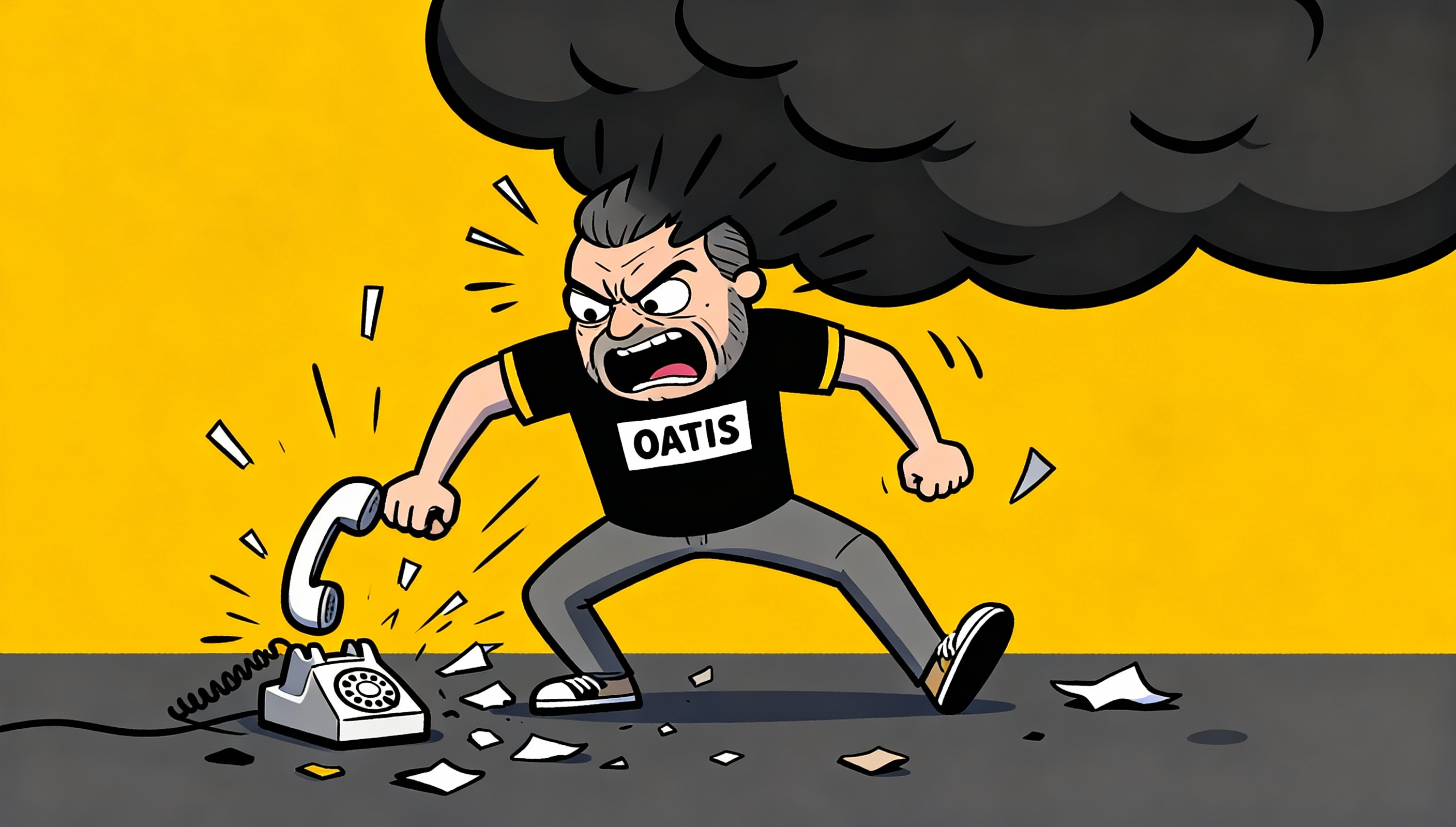
If there was a single moment in 2025 that crystallised the erosion of consumer trust, it was the Oasis reunion ticket sale.
The announcement of "Live '25" was meant to be the cultural event of the decade—a nostalgia-fueled celebration of Britpop that would unite generations. Instead, it became a masterclass in how to destroy goodwill in under six hours.
Here's what happened:
On sale day, 14 million fans competed for 1.4 million tickets. Those odds were always going to disappoint people. But the way it played out? That's where Ticketmaster transformed disappointment into rage.
Fans were subjected to a "queue for the queue"—a purgatorial holding pattern that obfuscated ticket availability. When they finally got through, they faced hours of waiting. Four, five, six hours. The sunk cost fallacy kicked in hard.
Then came the punch in the face.
Fans who'd entered believing tickets were £135-£148 found them relabelled as "In Demand Standing" at checkout—same product, same access to Heaton Park or Wembley—but now over £355. Some packages hit £1,423.
This wasn't supply and demand. This was a bait-and-switch. In a physical queue, the price on the menu doesn't change while you wait. Ticketmaster altered the terms of the transaction after customers had invested significant time and emotional energy, exploiting FOMO and cognitive load.
The fallout:
The term "Supersonic Swindle" trended immediately. Unlike previous complaints about scalpers, this anger was aimed squarely at the official primary seller—and the artists themselves.
The UK government mobilised. The Competition and Markets Authority (CMA) launched an investigation into unfair commercial practices, focusing on transparency, pressure selling, and pricing information.
By September 2025, Ticketmaster was compelled to sign legally binding undertakings with the CMA: 24-hour notice if dynamic pricing would be used, clear pricing throughout the queue process, no more hiding the algorithm behind a loading screen. The reputational damage is lasting.
The lesson: In the algorithmic economy, transparency is the only antidote to rage. If your pricing is fluid, the parameters of that fluidity must be visible. Hiding the algorithm isn't a business strategy anymore—it's a regulatory liability.
The Death of the Middle: TGI Fridays and the Unremarkable Brand
Whilst Ticketmaster was enraging customers who actually wanted their service, TGI Fridays was discovering that nobody wanted theirs at all.
The UK arm collapsed in 2025—over 1,000 jobs lost. The brand that once defined "fun" American dining became a cautionary tale of irrelevance.
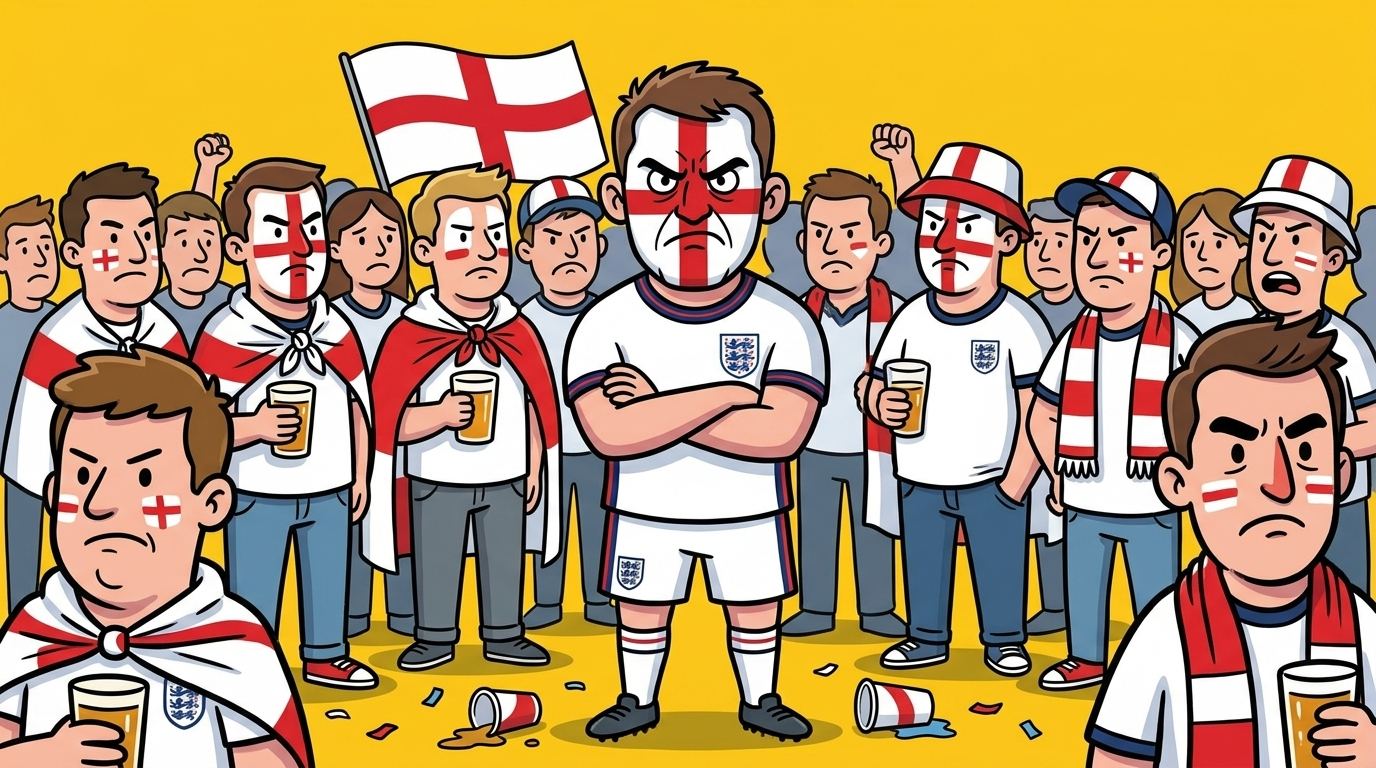
TGI Fridays occupied the dreaded middle ground. Not cheap enough to compete with Wetherspoons. Not good enough to justify the premium over a decent independent. Not Instagrammable enough for Gen Z. Not convenient enough for families.
They weren't bad. They were just... unremarkable. And in 2025's "calculated indulgence" economy—where shoppers riot for £15 Labubu plush toys whilst refusing to pay for a family meal—unremarkable is fatal.
The phenomenon isn't unique to hospitality. Carpetright collapsed under £350 million in debt. Entire high street brands are disappearing because they occupy the beige middle ground where no one has a strong opinion either way.
The lesson: In a bifurcated market where consumers either want premium experiences or ruthless efficiency, being "fine" is a death sentence. You must give people a reason to choose you, not just stumble into you by default.
Your Real QA Team? TikTok.
The true arbiter of CX quality in 2025 isn't your internal metrics, your quarterly surveys, or your carefully curated NPS scores.
It's the court of public opinion. And the court is now in session 24/7 on TikTok*.
From Chipotle to Spreadsheets: The Rise of the Shrinkflation Watchdog
Remember the Chipotle "phone method" from 2024? Customers filming workers to shame them into bigger portions? It was crude, confrontational, and it worked—until the chains retrained staff and the novelty wore off. (Here's the full story if you missed it.)
But that primitive tactic spawned something far more sophisticated in 2025: the citizen auditor.
As one analysis put it: "The transition from 2024 to 2025 marked a shift from the visual to the empirical. In 2024, accountability was sought through the camera lens... In 2025, accountability was sought through the spreadsheet and the screenshot."
Instead of filming individual employees, consumers are now conducting forensic investigations of entire supply chains and pricing mechanisms. The smartphone is still the weapon, but it's capturing data, not just portions.
UK examples:
- The Christmas Tub Wars - Viral TikTokers poured out Quality Street, Roses, and Celebrations tins to count specific high-value chocolates (The Purple One, The Truffle). They compared counts to historical data and accused brands of filling tubs with cheaper, sugar-dense toffees whilst reducing expensive chocolate-heavy units. Quality Street faced particular backlash for tubs that appeared nearly half-empty upon opening.
- Supermarket "value" claims dismantled by Reddit and TikTok communities maintaining spreadsheets tracking unit prices across retailers, exposing when "special offers" are actually worse value than competitors' regular prices
- Gaviscon pharmaceutical shrinkflation documented across patient forums as bottle sizes reduced from 600ml to 500ml whilst prices held at £14—a 20% increase in price per 100ml, framed as "exploitation of the sick"
But here's where it gets interesting: this forensic consumer activism isn't happening in isolation. It's part of a broader cultural shift.
Enter "Loud Budgeting" and "Underconsumption Core"—the twin Gen Z movements that dominated UK social media in 2025. Where previous generations quietly economised, Gen Z are vocally proud of spending less. They're posting videos of their "no-buy months," celebrating shopping their own wardrobes, and publicly calling out overpriced products.
This isn't your parents' coupon clipping. This is conscious, visible resistance to consumption as identity. And it's forcing brands to reckon with a customer base that views restraint as aspirational rather than embarrassing.
Two-thirds of Gen Z now happily discuss money with friends, according to Standard Life research. The shame that once surrounded "I can't afford that" has evaporated. Now it's "I won't afford that, and here's my spreadsheet proving you're ripping everyone off."
The lesson: Transparency isn't enforced through shame anymore. It's enforced through evidence. Your customers have moved from reactive complaining to proactive auditing. And they've made frugality cool whilst they're at it.
The Death of NPS and the Post-Survey Era
Right. Let's talk about the elephant in the room.
For two decades, the Net Promoter Score (NPS) was the undisputed king of CX metrics. "Would you recommend us to a friend?" Simple. Clean. Trackable.
In 2025, the industry has largely declared it a vanity metric.
Here's why: a simple 0-10 score, collected from a biased sample of customers who bother to take surveys, fails to capture the nuance of the customer experience. Worse, it doesn't actually predict financial outcomes. You can have a "good" NPS and still be haemorrhaging customers. You can have a "bad" NPS and be growing like wildfire.
The new paradigm? Unstructured Data Analytics.
Stop asking customers what they think. Analyse what they're already saying:
- Call transcripts
- Chat logs
- Social media mentions
- Review site data
- Support tickets
But then we would say that, wouldn't we?
Nonetheless, if you need help with this stuff in 2026, you know where to come.
VoC Has Left the Building (The CX Building, That Is)
In 2025, Voice of Customer data finally broke out of the "CX Silo" and entered the boardroom.
By integrating sentiment data directly into Business Intelligence tools like Power BI and Tableau, companies can now correlate "Customer Sentiment" with "Revenue" and "Operational Costs" in real-time.
Example: A retailer notices a spike in returns. Traditional metrics show what is happening. VoC analytics reveal why: a specific batch of clothing has a sizing defect mentioned in chat logs but not in formal return codes. The product team recalls the batch immediately, saving millions in future returns and brand damage.
The question for 2026: Are you listening to what your customers are already telling you? Because they're not hiding it. It's all there in the data you're already collecting.
The companies winning aren't the ones with the flashiest AI models. They're the ones using technology to make customers feel seen, heard, and valued—whether that's a bot processing a refund in milliseconds, or a human sending flowers to a grieving pet owner.
The tool has changed. The mandate hasn't.
That's a wrap on the 2025 CX Review. Thanks for sticking with us through the year. We'll be back in January with some hot takes about whatever AI drama unfolds over Christmas and to share our learning journey with you all.
Until then: put down the laptop, double negronis all round, and for the love of all that's holy, stop checking your emails.
Merry Christmas, you filthy animals.
Pete
*P.S. The court of public opinion on TikTok is not in session if you’re young, live in Australia and it’s today, apparently. As we go to press (AKA hitting “send”) we read news that the Aussies are implementing a ban on social media use for people under 16, the first country to take such a far-reaching measure. Presumably, the ban doesn’t extend to us English cricket fans, more’s the pity.
More from CX Corner
The Customer Ledger
Every interaction is a credit or a debit — and the customers about to leave stop paying in long before they say a word.
 The Great Bifurcation
Service is splitting into cheap-and-automated versus premium-and-human — and the middle is the dangerous place to sit.
The Great Bifurcation
Service is splitting into cheap-and-automated versus premium-and-human — and the middle is the dangerous place to sit.
 Your CFO Thinks You're Making It Up
How to turn “customers seem happier” into a number your finance director will actually sign off on.
Your CFO Thinks You're Making It Up
How to turn “customers seem happier” into a number your finance director will actually sign off on.
