 The Customer Ledger
Every interaction is a credit or a debit — and the customers about to leave stop paying in long before they say a word.
The Customer Ledger
Every interaction is a credit or a debit — and the customers about to leave stop paying in long before they say a word.
Your CFO Thinks You're Making It Up
How to turn “customers seem happier” into a number your finance director will actually sign off on.
Created 4 November 2025
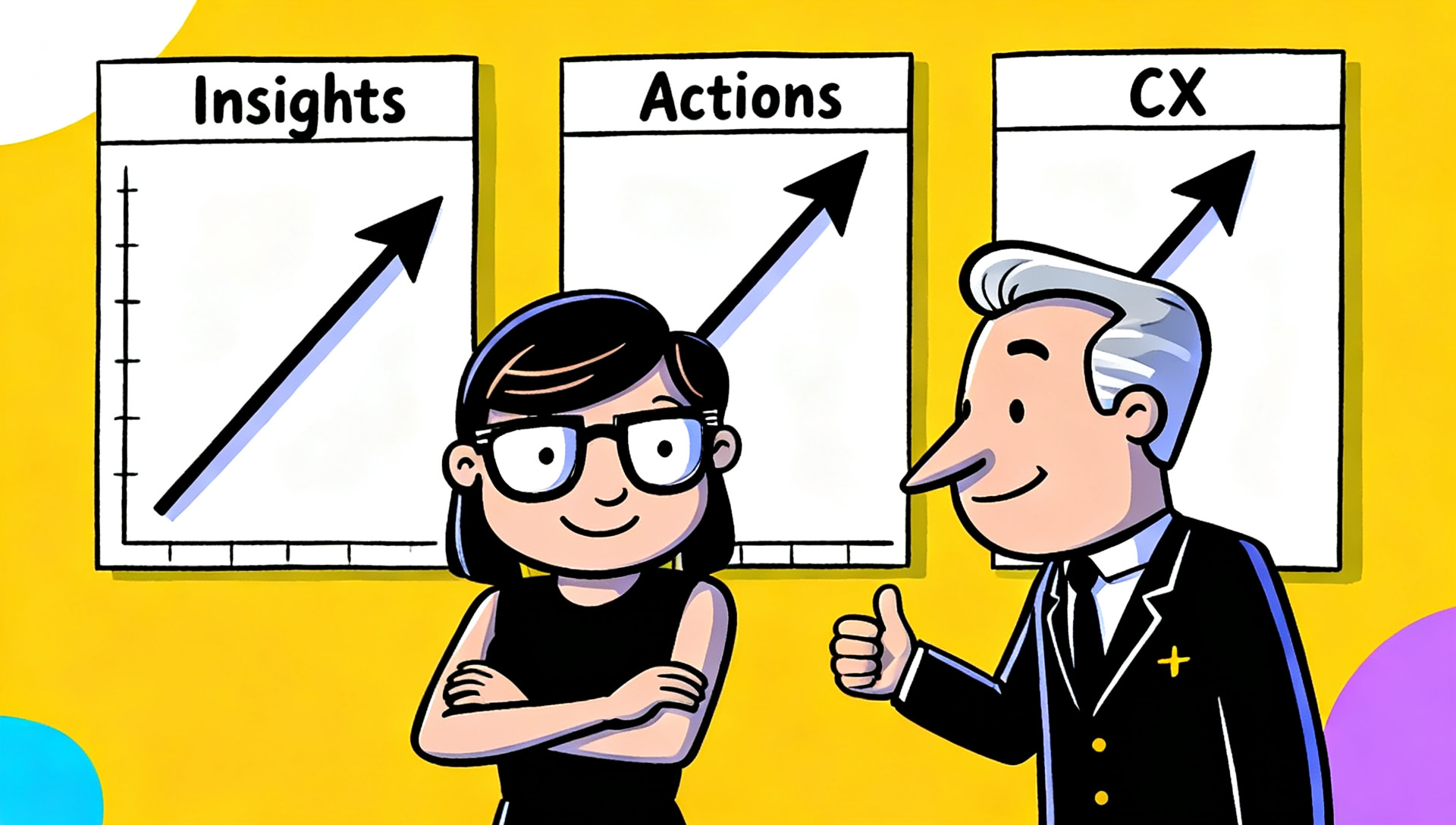
Hey there,
"In the past, we've been criticised for things being too subjective."
That's what a CX manager from a major Housing Association told us last month.
Translation: The finance team thinks our analysis is bollocks. And honestly? Are they wrong?
Or what about another real issue from another real CX leader, this time a Customer Influence Manager:
"The feedback we get is, like: 'I don't want to hear about it if it's only 10 comments.’"
Their leadership won't act on feedback because it feels anecdotal. Subjective. Made up.
But we all know that insights don't work like that:
- A thousand people don't like your rebrand—boo hoo!
- Three people from the same postcode talk about one of your restaurants giving them food poisoning—send in Gordon Ramsay in his arse-kicking boots
All Action, No Traction
At dinner on the Newcastle quayside the other week,* former National Express Head of CX and friend of the 'Nerds, Vinay Parmar, dropped this truth bomb:
"Most CX leaders come from operational backgrounds. They can spot problems brilliantly. But ask them to build a commercial narrative? They're stuffed."
He's right. We're brilliant at finding issues. Terrible at explaining why anyone should care.
The secret isn't better insights. It's building what one housing provider called "the golden thread"—the connection from customer feedback through to what actually happens in the business.
The Value-Chain Method
After speaking to a bunch of CX professionals (you know who you are—thank you!) and digging through the research on frameworks that actually work, here's what separates ignored insights from acted-upon insights:
Step 1: Start with the Insight "Customers complain about shipping delays" (standard feedback theme). Use numbers and quotes—nothing is drier than just graphs—just enough to show people your insights are robust.
Step 2: Link to Operational Reality Connect this to something operations already tracks: "Average Delivery Time."
Step 3: Create the Chain Draw the line: Shipping Complaints → Delivery Time → Customer Behaviour → Business Impact.
Now you're not presenting "feedback." You're showing cause and effect.
Real Example
A large housing provider had feedback about damp issues. Standard approach: "192 tenants mentioned damp problems."
Value-chain approach:
- Customer Feedback & Feeling: "Damp complaints in 192 properties leading to anger, worry, frustration”
- Operational Metric: "Response time to maintenance requests"
- Customer Action: “Potential to raise formal complaint and escalate to the Housing Ombudsman”
- Business Impact: "Regulatory compliance risk under Housing Act"
- The Story: "These complaints indicate a £50k x 192 compliance risk that ops can prevent with proactive maintenance."
Same data. Completely different conversation.
The Value-Chain Framework
Stop presenting themes. Start building chains:
.png)
This isn't about making up ROI (Spoiler Alert: we’re looking at how Insights and CX teams can better articulate ROI as a whole separate topic right now). It's about connecting dots that already exist.
Why This Matters Now
For years, we have obsessed over word-nerdery: how to improve classification, create more accurate sentiment models, and prioritise insights to elevate the most important comments to the top of the pile. It’s our bread and butter.
But more recently we’ve been reflecting on conversations about the steps before and after we usually get involved. The best insights in the world mean nothing if they die in PowerPoint.
We're seeing CX teams decimated. Brilliant professionals laid off. Not because their insights weren't valuable, but because they couldn't articulate that value in a way that resonated with decision-makers.
The time for hoping leadership "gets it" is over. We need to build narratives they can't ignore.
Insight to Influence: How Do You Tackle It?
Thank you to everyone who took the time to click the Good/Bad/Ugly link at the bottom of the last edition, and particularly to those of you who replied with your thoughts. You are the professionals here, not us. We get to watch you find new and interesting ways to solve these issues and share the learning for everyone's benefit.
We're planning a series of resources that address the journey from insight through influence to impact. But we need case studies, examples, and stories from real practitioners.
So please do take a minute to share how this landed for you. How are you building narratives that actually drive action? How important is this issue to you?
Try This Tomorrow
Pick your most ignored insight. Now build the chain:
- What exactly did customers say?
- What operational metric does this affect?
- How does that metric connect to business outcomes?
- What's the story that connects all three?
If you can't build the chain, you don't have an insight problem. You have a narrative problem.
Bust your new narrative out on the senior leadership team and look forward to your new-found status as a bona fide strategic thinker.
You are welcome!
Pete
*We made Vinay drive up for dinner to Khai Khai in Newcastle purely to try the smoked broccoli. Ridiculous, isn't it? Broccoli so good that someone drives up from the Midlands just to try it. He wasn't disappointed.
More from CX Corner
The Customer Ledger
Every interaction is a credit or a debit — and the customers about to leave stop paying in long before they say a word.
 2025: Losers & Lessons
A look back at the year's biggest customer-experience faceplants, and what the rest of us should take from them.
2025: Losers & Lessons
A look back at the year's biggest customer-experience faceplants, and what the rest of us should take from them.
 The Great Bifurcation
Service is splitting into cheap-and-automated versus premium-and-human — and the middle is the dangerous place to sit.
The Great Bifurcation
Service is splitting into cheap-and-automated versus premium-and-human — and the middle is the dangerous place to sit.
